


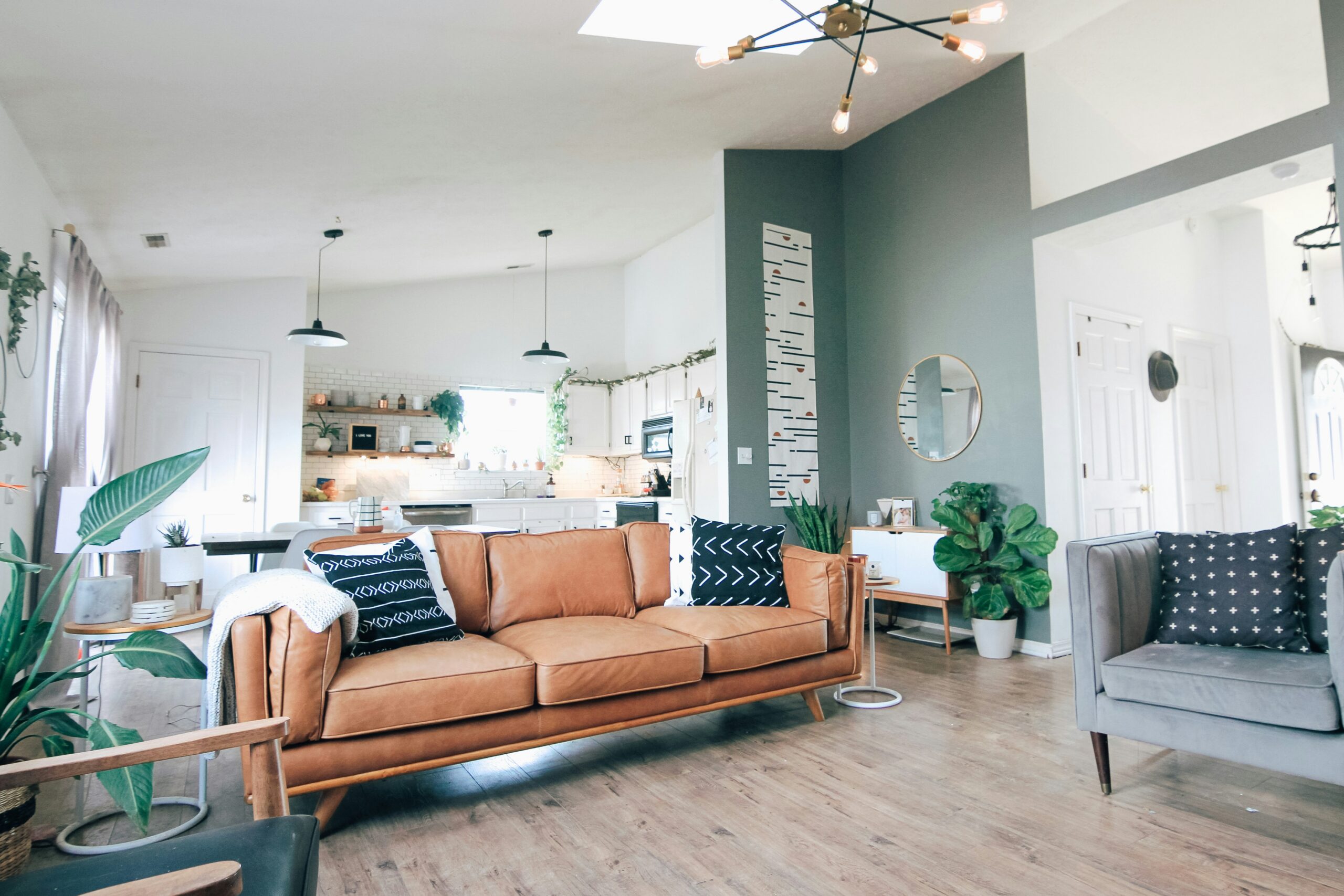
Every now and then, it’s normal to get the itch to switch things around in your home – particularly at the start of the year when we’re craving something fresh and new. And there’s no better place to begin than the living room: it’s where we unwind after long days, host friends, and spend a huge amount of our everyday time.
Because it’s such a central part of the home, even small layout changes here can make the whole space feel new again, along with having a positive impact on your mental and physical wellbeing too.
This guide will show you how to rearrange your living room by ‘shopping your own home’, using what you already have and placing it with more intention. You’ll be surprised how much bigger a room can feel when the layout makes sense, and the layout supports how you actually live.
Focus on the flow
Before you start moving furniture around, take a step back and think about the flow of the room. Visual clutter and blocked pathways can actually create low-grade stress that can affect the way you feel when you spend time in a room. With clear traffic paths, your nervous system will naturally feel calmer, and you’ll find it easier to focus.
Flow is the invisible architecture of a home. Whilst it feels like magic, there’s actually a theory behind it. A well-designed floor plan creates an unobstructed path. If you have to walk around the coffee table to get to your sofa, your room will end up feeling more like an obstacle course.
Start by looking at how people naturally enter, cross and exit the space, from doorways to seating and the like. Keep the main walkways open and avoid placing coffee tables, ottomans or side chairs where they obstruct the route. Next, think about a focal point to organise the room around. This could be the television, the fireplace or a bay window, for example. Position your main seating to support it and add secondary seating to complete the shape.
How to rearrange your room for more space
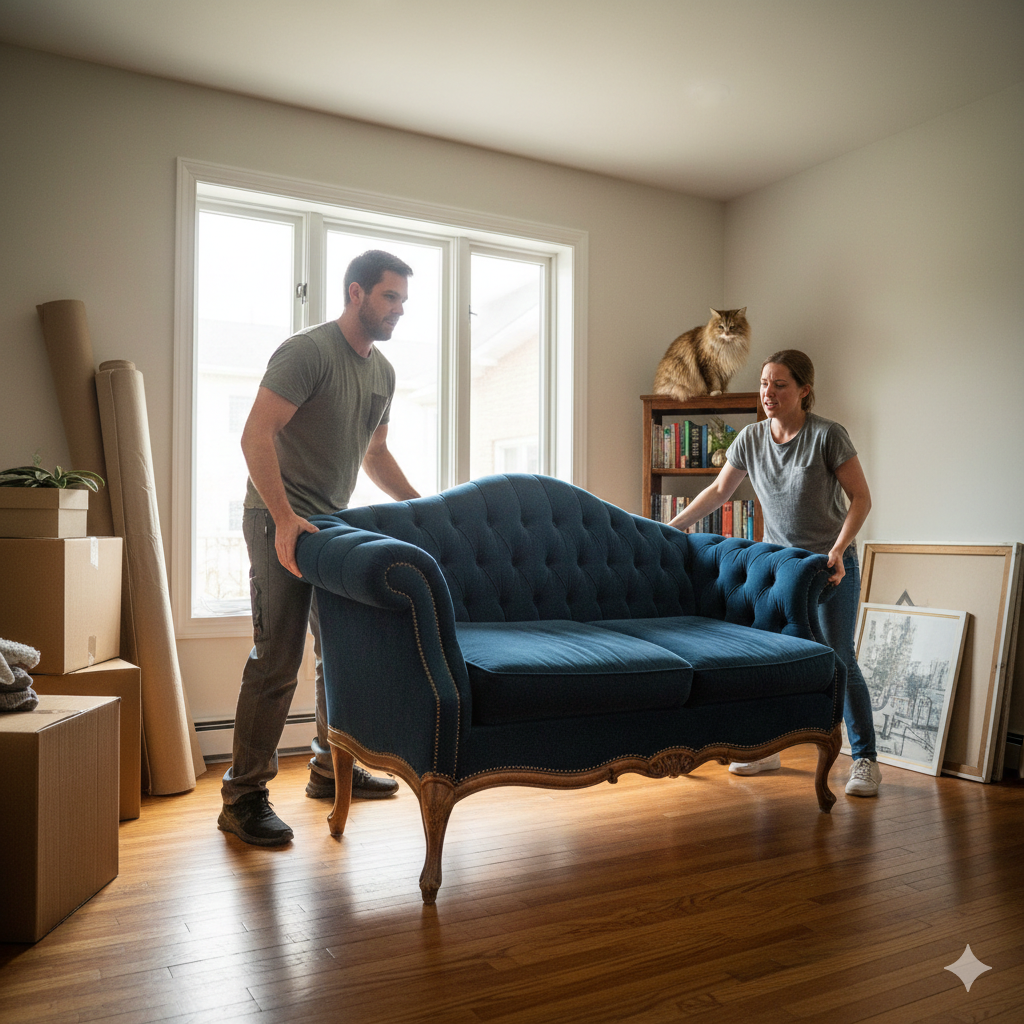
Every room is different, and you might have seen an idea on Pinterest, but is it actually right for the shape of your room? Some layouts can make the space feel smaller rather than bigger. The key to creating more space is choosing a layout that improves flow, reduces visual clutter, and makes each area feel purposeful.
For small living rooms, avoid pushing everything hard against the walls and leaving an awkward zone in the middle. More often than not, that doesn’t quite work. Anchor the main piece, for instance, the sofa, and make sure this faces the focal point of the room, whatever that might be. Only then add what needs to be added, such as a footstool or side chair. Skip smaller extras that create visual noise. If you can, pull the sofa a few centimetres forward or angle a chair slightly, so that the room doesn’t feel flat.
If your living room is long or narrow, avoid treating it like a corridor and lining your furniture along both sides. Again, think about your focal point and create a defined seating area around it. The remaining space becomes your second zone, which could be a reading corner or a desk, for example. This breaks the room into more purposeful areas.
When working with an open-plan space, furniture becomes your room divider. For instance, a sofa can work as a boundary to separate a dining area from a living area. Smaller pieces can then be added to reinforce the zone without creating obstacles. Leave breathing space between zones whilst ensuring that there is a clear route between furniture. It needs to feel like a destination rather than a pass-through.
How to ‘shop your own home’
When planning how to rearrange your living room, you don’t need to write a shopping list and set a budget. Instead, try shopping at your own home. This means using the items you already own and love to breathe new life into a space. It’s all about looking for things around your home that you can move into different rooms and use in new arrangements.
For instance, if you’ve got a few accent chairs in your home, try swapping them between rooms to add a new dimension of colour or a slightly different style to a space. The same can be said for side tables, lamps, cushions and throws. You can even rotate art and mirrors around your home.
Once you’ve had a little switch around using items from in and around your home, live with the layout for at least a week. Maybe you’ll love it and wonder why you didn’t do it sooner. But if you don’t, give it a little time before you immediately start moving things around again. Not only might you change your mind, but time will allow you the opportunity to work out what actually needs to switch.
If you decide a piece of furniture isn’t working, but you’re not sure what to do with it next, a personal self storage unit can be really beneficial. It can act as a temporary ‘reset zone’ for anything you’re not sure about yet. By storing the non-essentials for a while, you get a clearer view of what the room actually needs, and you can always bring items back if you miss them!
Common mistakes to avoid
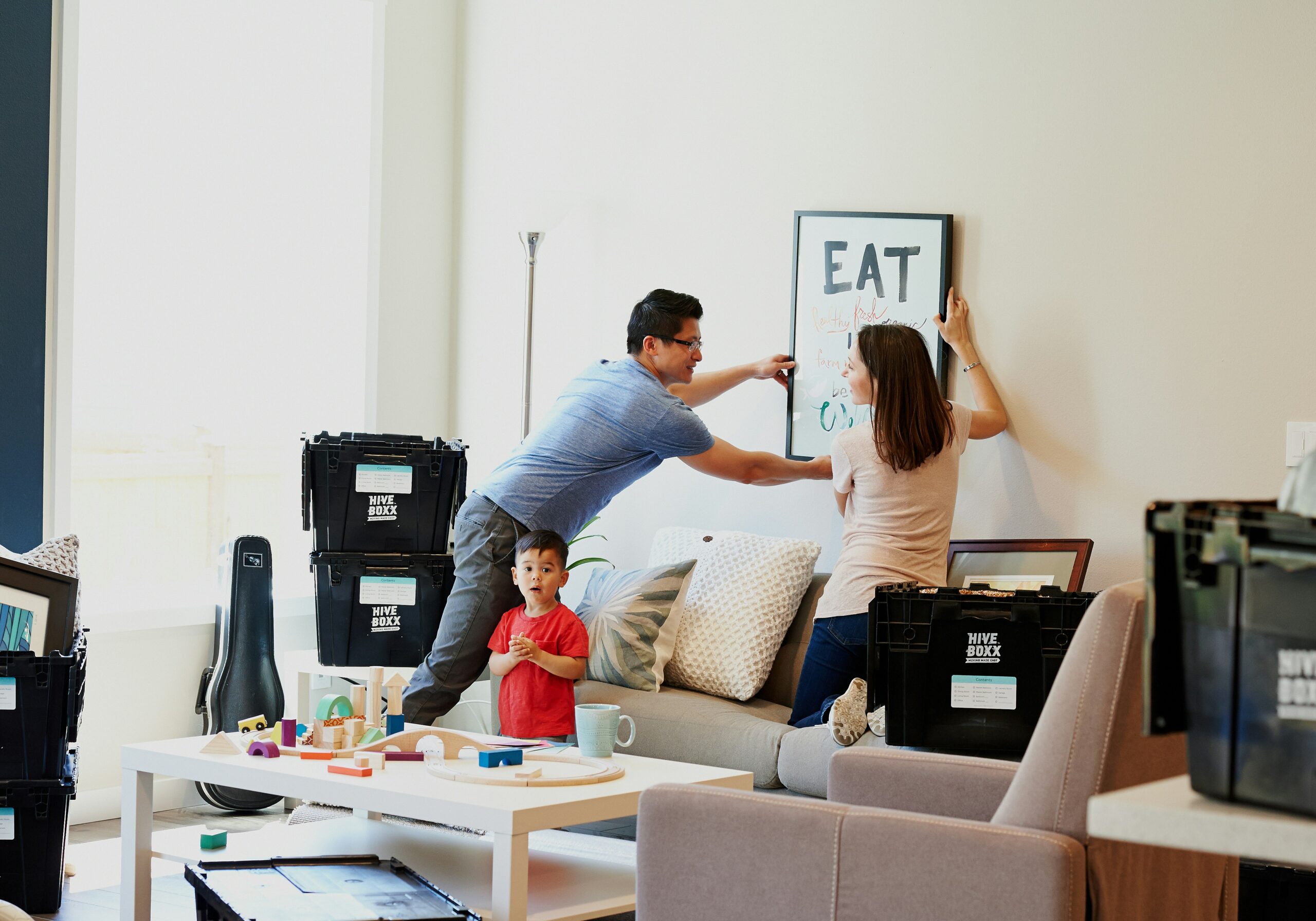
When deciding how to rearrange your living room, knowing what not to do is just as important as knowing what to do when it comes to rearranging a room and switching up the layout. Here are a few things to avoid when making your plans.
Don’t place all your furniture against the walls
Whilst it might feel strange to place furniture in open spaces as opposed to against a wall, sometimes it does actually make sense. You might think that it will create a more open feeling in the room, but it can limit conversation or make the space feel off-balance. Furniture needs to breathe, so make sure your items have a little space around them. Additionally, incorporate smaller items of floating furniture to create balance, such as side tables and lamps.
Don’t forget to consider scale
Furniture that is too big will leave a room feeling cramped, and furniture that is too small will make a room feel cavernous. Whatever furniture you decide to move around your space, make sure it’s carefully scaled for the space.
Copying social media
Of course, use social media for inspiration, but copying designs from Pinterest and the like too much can leave you failing to consider your space’s unique features. Ultimately, you might end up rearranging the room into a design that doesn’t work with the rest of your home. Use social media for inspiration, but first and foremost, consider how furniture placement will affect the flow and feel of the space.
Forgetting about doorways
A badly located door can be a real barrier. A door that opens into furniture, clips a rug or forces you to squeeze past a chair interrupts flow and creates friction. Of course, you can’t rearrange your door when giving the room a switch-up! But you can rearrange around the door. Start by noting the direction it swings, how wide it opens and where people naturally walk as they come in. This needs to be a no-furniture zone. Avoid placing bulky pieces directly behind the door, and don’t let your main seating spill into the entry path.
The benefits of rearranging your living room
It might seem like a lot of work at first, but rearranging your living room holds many benefits, making it well worth doing. Firstly, the flow and set-up of a room can affect your mood. Therefore, refreshing and changing this can make you feel calmer and lighter, giving the space a more welcoming vibe.
This has a knock-on effect on things like productivity. With a clearer mind, you’ll find it easier to start tasks with fewer distractions. A well-laid-out room will also be easier to tidy, with less clutter creeping in, which can only be a good thing.
Breathing new life into a room will breathe new life into your mind, boosting creativity and encouraging you to think outside the box and see things from a different angle. The effort you put into rearranging can also make you feel accomplished, enhancing your drive to pursue other things.
You might even discover a new use for a room by maximising the usefulness of the square footage. Perhaps you’ve moved some bookshelves and an accent chair into your lounge and created a mini library and reading nook. Perhaps by moving things around, you’ve created space for a cosy chill-out den for the kids in the corner.
Rearranging doesn’t have to mean replacing. Once you understand flow, clear traffic paths, a strong focal point, and furniture that supports how you actually move through the room, you can transform how the space feels with what you already own.
If you’ve been wondering how to rearrange your living room, hopefully this article has helped. And if your goal is how to rearrange your room for more space, remember that more space often comes from fewer obstacles, better sightlines, and a layout that reduces friction.
If you’re struggling to create breathing space while you experiment, self storage can make the process much easier. Storing the extras for a short period helps you see what layout works best, then you can reintroduce pieces intentionally rather than living around piles and half-moves. Get a quote from your nearest Magenta Self Storage location today.